Pengertian Relative Pronoun
Relative Pronoun adalah pronoun (kata ganti) untuk membentuk relative clause (adjective clause).
Relative clause sendiri merupakan subordinate clause yang menerangkan noun (kata benda) atau pronoun (kata ganti) pada main clause di dalam suatu complex sentence. Di dalam relative clause, kata ganti Bahasa Inggris ini dapat berfungsi sebagai subject, direct object, atau possessive dan tidak mewakili number (tunggal atau jamak) maupun gender (laki-laki atau perempuan) dalam posisi-posisi tersebut.
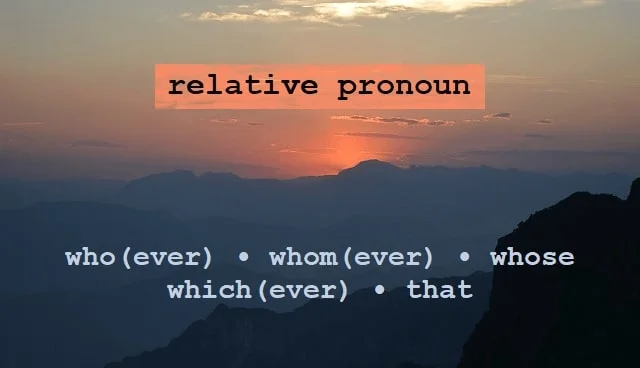
Relative pronoun meliputi:
- who
- whom
- whose
- which
- that
- indefinite relative pronoun dengan suffix -ever, yaitu: whoever, whomever, dan whichever
Lihat juga:
Rumus Relative Clause dan Complex Sentence
Relative pronoun merupakan bagian dari relative clause yang tidak dapat berdiri sendiri, melainkan berada di dalam complex sentence. Sedangkan complex sentence merupakan gabungan dari independent clause (kalimat utuh) dan subordinate clause (relative clause). Gambaran lebih jelasnya dapat dilihat pada rumus berikut.
Relative Clause = Relative Pronoun +/- Subject + Verb
Complex Sentence = Independent Clause + Relative Clause
Contoh Relative Clause dan Complex Sentence
- pronoun: that
- relative clause: that I bought last week
- complex sentence: This is the book that I bought last week.
(Ini buku yang saya beli minggu kemarin.)
Penggunaan dan Contoh Kalimat Relative Pronoun di dalam Relative Clause
Who dan Whoever
Who (siapa) dan whoever (siapapun) berfungsi menghubungkan noun berupa orang (subject/object of sentence) dengan verb pada relative clause. Di dalam relative clause, relative pronoun ini berfungsi sebagai subjek atau objek.
Contoh Kalimat
- The boy who is playing football on the field is my neighbour.
(Anak yang sedang bermain sepakbola di lapangan adalah tetanggaku.)Keterangan
Who merupakan subjek dari verb “is playing” dan membentuk relative clause yang menerangkan subjek “boy”.
- I am looking for someone who is willing to help me fix my sink.
(Saya sedang mencari orang yang mau menolong saya memperbaiki wastafel saya.)Keterangan
Who merupakan subjek dari verb “is willing” dan membentuk relative clause yang menerangkan “someone”.
Which dan Whichever
Which (yang mana) dan whichever (yang manapun) berfungsi menghubungkan noun benda, binatang, atau kadang-kadang orang (subject/object of sentence) dengan relative clause. Which lebih spesifik dari what. Di dalam relative clause, pronoun ini berperan sebagai subjek atau objek.
Contoh Kalimat
- The table which is made of oak wood has broken.
(Meja yang terbuat dari kayu oak sudah patah.)Keterangan
Which merupakan subjek dari verb “was made” dan membentuk relative clause yang menerangkan “table”.
- He can choose a room whichever he likes.
(Dia dapat memilih kamar yang manapun yang dia sukai.)Keterangan
Whichever merupakan objek dari verb “likes” dan membentuk relative clause yang menerangkan direct object “room”.
Whose
Whose (punya/milik siapa) berfungsi untuk menyatakan kepemilikan terhadap benda maupun orang yang diterangkan pada bagian klausa-nya.
Contoh Kalimat
The woman whose car I want to buy is my old friend.
(Wanita yang mobilnya saya ingin beli adalah teman lama saya.)
Keterangan
Whose merupakan possessive dengan “car” sebagai noun yang dimilikinya.
Whom dan Whomever
Whom (dengan / untuk / kepada siapa) dan whomever (dengan / untuk / kepada siapapun) merupakan bentuk yang lebih formal dari who dan whoever. Whom sering diawali oleh preposition (berfungsi sebagai object of preposition). Pronoun ini berfungsi sebagai objek pada relative clause.
Contoh Kalimat
He is the one for whom I’m waiting.
(Dia satu-satunya yang sedang saya tunggu.)
Whom ialah object of preposition “for” serta membentuk relative clause yang menerangkan “one”.
The team whom you were watching has won three gold medals.
(Tim yang kamu tonton telah memenangkan tiga medali emas.)
Whom merupakan object dari verb “were watching” serta membentuk relative clause yang menerangkan “team”.
Lihat juga:
That
That berfungsi untuk menghubungkan noun berupa benda atau kadang-kadang orang yang merupakan subjek atau objek suatu kalimat dengan relative clause. Di dalam relative clause, kata ganti ini berperan sebagai subjek atau objek.
That digunakan pada defining clause. Pronoun ini cenderung informal dibanding who dan which.
Contoh Kalimat
Cats that live in the wild may have a better immune system.
(Kucing-kucing yang hidup di alam liar mungkin punya sistem imun yang lebih baik.)
That merupakan subjek dari verb “live” serta membentuk relative clause yang menerangkan “cats”.
The laptop that I bought five years ago is still work properly.
(Laptop yang saya beli lima tahun lalu masih bekerja dengan baik.)
That merupakan objek dari verb “bought” serta membentuk relative clause yang menerangkan “laptop”.
Lihat juga:
10 Contoh Soal Relative Pronoun
Relative pronoun merupakan pronoun (kata ganti) yang berfungsi untuk membentuk relative clause. Klausa tersebut berfungsi untuk menerangkan noun atau pronoun pada main clause di dalam suatu complex sentence.
Pronoun ini meliputi:
- who(ever)
- whom(ever)
- whose
- which(ever)
- that
Di dalam suatu relative clause, kata ganti ini mungkin berperan sebagai subject, object, atau possessive.

Ketik a, b, atau c untuk melengkapi kalimat di bawah ini.
-
Vina’s brother, … is extremely dilligent, named his new baby Tommy.
- that
- whom
- who
Your answer:
-
The car … was bought by Adam two year ago has broken down so many times.
- whom
- which
- whose
Your answer:
-
The man … is eating ramen noodles on the convenience store lives near my house.
- which
- who
- whom
Your answer:
-
The poor boy is sleeping on the mattress, … is too dirty and old.
- which
- that
- whose
Your answer:
-
The worker … you are looking won’t be back to the office today.
- whom
- for whom
- to whom
Your answer:
-
Marie Curie, … husband worked as a laboratory instructor, was a pioneer in the field of radiology.
- whose
- who
- whom
Your answer:
-
It was Sarah … couldn’t stop fooling around.
- whom
- that
- which
Your answer:
-
People … eat fruits and vegetables may have more attractive skin color.
- that
- which
- whom
Your answer:
-
The software … maker was unknown was used by many retailers.
- that
- whom
- whose
Your answer:
-
The person … I want to send this package has moved to unknown location.
- to whom
- whom
- from whom
Your answer:
Javascript diperlukan untuk menjalankan quiz ini.
Lihat juga:
References:
- Relative Pronouns. englishclub.com. Accessed on October 16, 2012.
- Who & Whom. web.ku.edu/~edit/whom.html. Accessed on October 16, 2012.
- Relative Clause Quiz. esl.about.com. Accessed on December 18, 2013.


Maaf , kalau kalimat nya seperti ini , bagaimana cara menggabungkan nya ?
– The house is very old
– The taylors live in the house
Kamu bisa gunakan which.. Dengan mereduksi kata yg sama ( the house), menjadi: The taylors live in the house which is very old.
kalau jawabanya gini bener juga kn. ??
the house where the tailors live is very old ..
Pada dasarnya sih adjective/relative clause itu kan “tambahan informasi” baik yang esensial atau tidak. Kalo tidak ada syarat kalimat harus sambung menyambung, tentu aja bisa juga pake “where” karena where merupakan salah satu relative pronoun yang bisa berfungsi sebagai objek di dalam relative clause, dalam hal ini, objek dari verb “live”.
sekedar bagi-bagi ilmu neh
ada cara-cara mudaj untuk menghapal relative pronoun
ini saya kasih rumusnya penggunaan who dan whom
1. person + who + verb + complement (if any)
2. person + whom + subject + complement (if any)
example
1.1. She is the gril who helped me this morning
2.1. my elder brother married someone whom we really do not liky
untuk yg laen nanti saya bagi2 lagi
saya butuh koreksi dan tanggapanya terima kasih
Hi Febryan, sekedar menambahkan saja, who bisa juga digunakan sebagai object of preposition, biasanya untuk informal (formal= whom) jd misal rumusnya:
S (of sentence) + who + S (of rel. clause) + V +prep.
Contoh: The man who I just gave two pieces of cake to is my brother.
atau
The man to whom I just gave two pieces of cake is my brother.
Terima kasih sudah berbagi, saya tunggu kelanjutannya. 🙂
1. My father knows that man. The man sold you the shoes.
2. Mr Jaka has bought a new car. The color is blue.
3. We are having a farewell party for Miss Susi. She is leaving us soon.
4. He is the owner. We are renting his house.
5. I see the girl. Her motorcycle was new.
tolong bantuannya ya… bingung sekalian koreksi
1. my father knows that man whose sold you the shoes
2.
3. we are having a farewell party for miss susi whom leaving us soon
4. he who renting house is the owner
5. I see the girl whom motorcycle was new
1. My father knows that man who sold you the shoes.
2. Mr Jaka has bought a new car whose color is blue.
3. We are having a farewell party for Miss Susi who is leaving us soon.
4. He is the owner from whom we are renting…
5. I see the girl whose motorcycle was new.
Itu menurut saya berdasarkan referensi2 pada artikel ini. 🙂
bagaimana cara penggunaan relative pronouns pada kalimat berikut ini
*the students going on foot reached the workshop before those going by motorcycle
*are there any shops selling camping eqiupment here?
Halo Novan,
Kalimat-kalimat itu sudah mengalami reduksi adjective clause, kira2 bentuk asalnya seperti ini (relative clause=bold; relative pronoun=bold miring):
Jadi, going on foot, going by motorcycle, dan selling camping equipment hasil reduksi dari klausa yang digaris bawahi di atas. Sedikit penjelasan, pada reduksi active voice, relative pronoun dan verb to be (jika ada) dihapus serta ditambahkan –ing pada verb bentuk simple present-nya (V-1) sehingga membentuk present participle.
Hope this helps. 🙂
kalau di buat mnjdi kalimat relative pronoun gmn yaa
1)we got into a bus.it was over-crowded
Bisa pakai which atau that ulva, jadinya:
We got into the bus which was overcrowded.